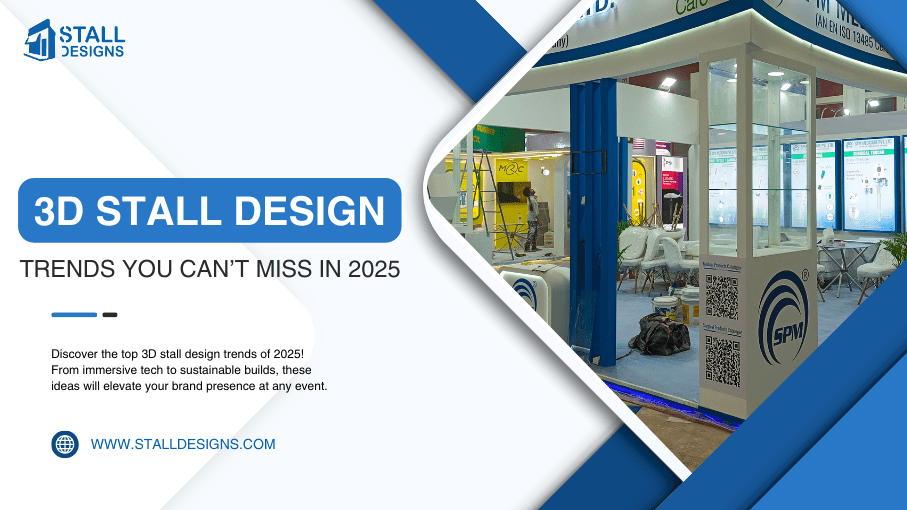
In today’s competitive world of trade shows and exhibitions, creating a strong brand presence is no longer optional—it’s a necessity. One of the most effective ways to capture audience attention is through 3D stall design. Unlike traditional setups, 3D designs bring a stall to life with interactive elements, immersive visuals, and innovative structures that leave a lasting impression.
As we move into 2025, businesses are embracing new technologies and creative approaches in stall fabrication to make their booths stand out. In this blog, we’ll explore the latest 3D exhibition booth design trends, the role of booth design and fabrication, and why working with an expert exhibition booth designer is the key to success.
Why 3D Stall Design Matters in 2025
Exhibitions have always been about making connections, showcasing products, and building brand visibility. However, with audiences becoming more digitally savvy, expectations are higher than ever. Visitors now want experiences, not just stalls.
This is where 3D booth rendering plays a crucial role:
- It creates immersive experiences with engaging visuals.
- It enhances brand recall by blending creativity with strategy.
- It drives footfall by standing out in a crowded exhibition hall.
- It allows businesses to showcase products interactively, using AR/VR, lighting, and digital displays.
By investing in cutting-edge stall fabrication and innovative booth design and fabrication, companies can transform a simple stall into a brand experience.
Top 3D Stall Design Trends for 2025
1. Sustainable Stall Fabrication
Eco-friendly design is no longer just a buzzword—it’s a necessity. Businesses are now opting for stall fabrication materials that are reusable, recyclable, and environmentally conscious. From bamboo panels to modular aluminum structures, sustainability is becoming the foundation of modern booth design and fabrication.
2. Technology-Integrated Designs
Interactive screens, augmented reality demos, and virtual product showcases are redefining how brands engage with visitors. In 2025, expect 3D stall design to include:
- VR walkthroughs for product experiences
- Smart LED walls with motion-activated content
- Holographic displays to showcase product features
An experienced exhibition booth designer can help integrate these technologies seamlessly into the design.
3. Modular & Flexible Booth Design
Flexibility is key for businesses that attend multiple trade shows. Modular booth design and fabrication allow brands to adapt their stalls to different event sizes and layouts without starting from scratch. In 2025, modular systems will be even more advanced, offering customization without compromising creativity.
4. Minimalist Yet Impactful Designs
Clean lines, bold typography, and clutter-free spaces are becoming more popular. Visitors prefer stalls that are easy to navigate and visually appealing. A smart exhibition booth designer knows how to balance minimalism with brand storytelling, ensuring the stall makes a statement without overwhelming the audience.
5. Immersive Lighting & Projection Mapping
Lighting isn’t just about visibility—it’s about experience. In 2025, 3D exhibition booth design will focus heavily on dynamic lighting and projection mapping. Imagine a stall where visuals change based on visitor interaction—that’s the future of stall fabrication.
6. Multi-Sensory Experiences
The best stalls engage more than just the eyes. Incorporating soundscapes, interactive touchpoints, and even scent marketing can create memorable visitor experiences. Booth design and fabrication are evolving to include these sensory elements that help brands connect emotionally with their audience.
The Role of Stall Fabrication in Successful Exhibitions
A great design is only as good as its execution. This is where stall fabrication becomes critical. High-quality fabrication ensures that the stall not only looks impressive but is also durable, safe, and functional throughout the event.
Key factors in modern stall fabrication include:
- Using lightweight yet sturdy materials for easy installation.
- Ensuring precision so the final structure matches the 3D concept.
- Incorporating modular systems for reusability.
- Meeting safety and compliance standards for exhibitions.
When booth design and fabrication are handled by experts, brands can focus on engaging with visitors while leaving the technical aspects to professionals.
Why You Need a Professional Exhibition Booth Designer
While some businesses attempt DIY setups, the difference a professional exhibition booth designer brings is undeniable. These experts combine creativity with strategy to deliver designs that not only look good but also serve business goals.
An exhibition booth designer will:
- Translate your brand identity into visual storytelling.
- Incorporate visitor flow strategies to maximize engagement.
- Suggest the latest 3D stall design trends suitable for your industry.
- Ensure your stall meets both creative and functional requirements.
Ultimately, working with professionals ensures that your investment in booth design and fabrication pays off in the form of higher footfall, better engagement, and stronger brand recall.
Conclusion
As exhibitions continue to evolve, 3D booth rendering will be at the forefront of innovation in 2025. From sustainable stall fabrication to high-tech booth design and fabrication, the trends clearly show that businesses must think beyond traditional setups. Partnering with an expert exhibition booth designer is the key to unlocking these opportunities.
If your goal is to stand out, inspire, and engage in the coming year, investing in a smart and futuristic 3D stall design is the way forward.
 Exhibition Stall Designs
Leave a comment